
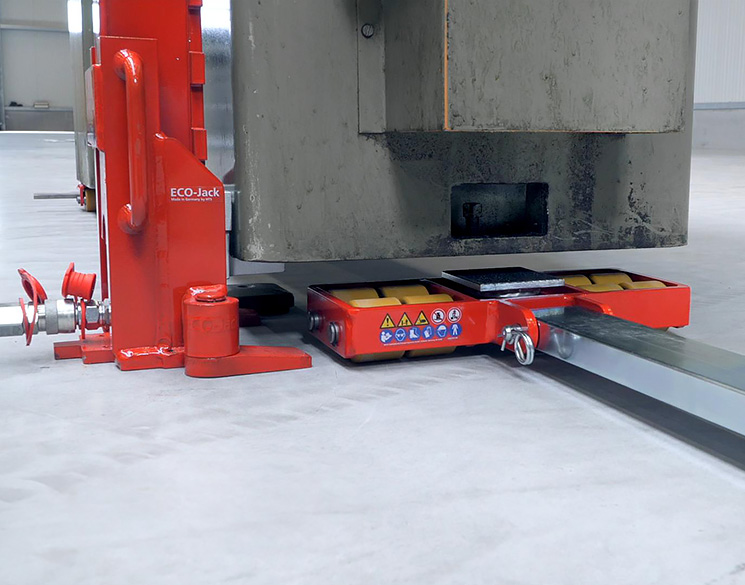
When teams plan a heavy equipment move, the focus often starts with load weight, dimensions, and final positioning. Those factors matter, but floor conditions can be just as important. The surface beneath the load affects stability, control, maneuverability, and the type of system that makes the most sense for the job.
A move that looks straightforward on paper can become much more complicated if the floor is uneven, space is tight, or the route includes transitions that affect how the load travels. That is why floor conditions should be part of the conversation from the beginning.
Smooth Floors Still Require the Right Setup
A smooth concrete floor may seem ideal, but that does not automatically mean any system will perform the same way. Load size, center of gravity, and the amount of space available for steering still matter. In open areas with a predictable route, a standard machine moving setup may work well. In tighter areas, however, floor space and turning room can quickly become limiting factors.
When the move requires more controlled directional changes, a system built for precise maneuvering can make a noticeable difference.
Tight Spaces Change the Demands of the Move
Older facilities, crowded production areas, and narrow aisles often create route conditions that call for a different approach. In those environments, the floor may be clear enough for movement, but the available space still affects how the load must be handled.
This is where more maneuverable options become valuable. A load moving system that supports smoother steering and better control can help operators work through confined areas without relying on repeated repositioning or unnecessary force. When there is little margin for error, the ability to move matters deliberately.
Low Clearance and Surface Conditions Matter Too
Floor conditions are not always just about the path. They can also affect how the load is lifted and placed onto the moving system in the first place. If the equipment has low ground clearance or limited access points, the setup may need to account for that before the move can even begin.
In those situations, the right lifting equipment can be just as important as the right skates. Looking at the full move from lift to transport helps prevent issues that might not be obvious if the focus stays only on the rolling portion of the job.
The Best System Depends on the Whole Environment
Choosing a load moving system is rarely just about picking the highest capacity option. It is about matching the equipment to the environment, the route, and the demands of the move. Floor surface, available maneuvering room, load profile, and lifting requirements all shape that decision.
At HTS Direct LLC, we help customers look at the full picture before choosing a system. Whether the job calls for ECO-Jack® lifting equipment, ECO-Skate® load moving systems, ROTO flex skates for tighter maneuvering, or a POWER-Skate® solution for more controlled movement, we can help you identify the setup that fits the conditions of the move.
Call us at (616) 591-3945 to talk through your application.